


Sleep remains one of the great enigmas of human physiology. Why we spend approximately one-third of our lives asleep, unconscious, and vulnerable to predators, on the surface seems to make no evolutionary sense, but the fact that sleep, in one form or another, has been preserved throughout evolution across all mammals, including humans, speaks directly to its importance.
Data from the Australian Institute of Health and Welfare shows that half of Australian adults report 2 or more sleep problems, and half of all teenagers do not meet sleep requirements on school nights. Chronic and persistent sleep debt has been associated with cardiovascular disease, Type 2 Diabetes, and autoimmune conditions, and both too long, and too short sleep, has been associated with all-cause mortality.
These sobering facts clearly highlight the importance of sleep, and why we should each pay particular attention to our sleep quality and quantity.
But the news isn’t all bad. Quality sleep begins the moment we wake up. How we approach our day and live our lives can have a profound effect on the quality and quantity of our sleep, and it all starts with getting the basics of sleep hygiene right to promote good sleep, then stacking targeted strategies and technologies to hack our way to optimum sleep.
In this article, we’ll cover the key components of quality sleep, helping you understand its structure and why knowing your own sleep patterns is essential if you’re looking to improve. We’ll also dive into practical steps you can take today to enhance your sleep hygiene and lifestyle, along with the latest technology to track and optimise your sleep.
The science of sleep
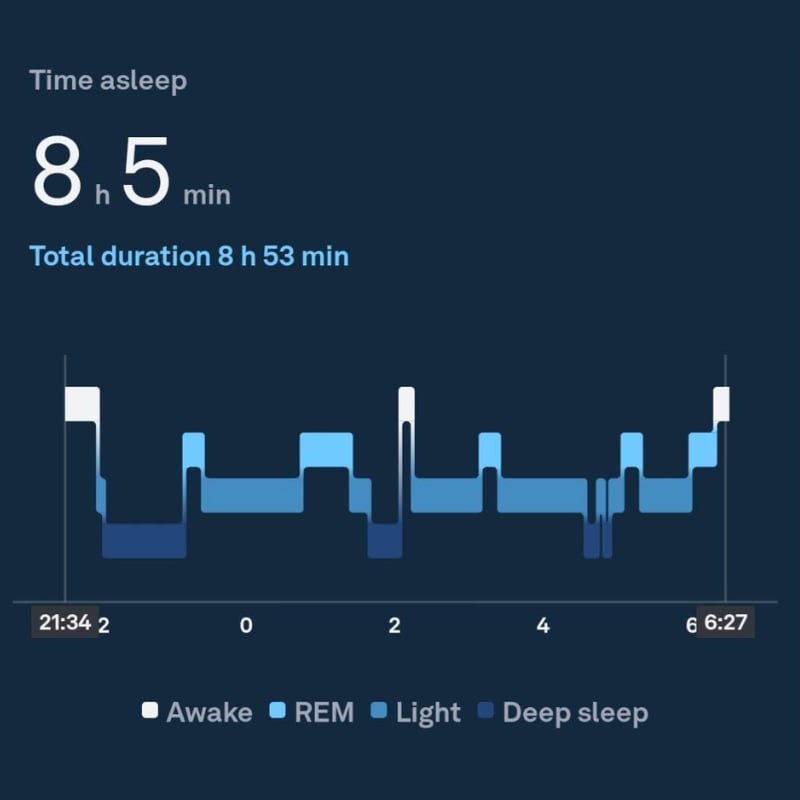
Sleep isn’t just a passive period of being unconscious, it’s a highly structured physiological process that can be tracked to several distinct stages. We can detect each stage by monitoring a person’s brain wave activity (EEG), muscle activity (EMG), and eye movement (EOG).
First, we enter the non-rapid eye movement (non-REM) sleep stage, which has three stages:
- Stage 1: The body starts to relax as we transition from wakefulness to drowsiness. Brain waves slow into the alpha state and then settle into the theta state. Muscles begin to relax, though slight twitching or slow movements may occur, and the eyes display slow rolling motions
- Stage 2: Brain waves continue slowing down, interspersed with bursts of activity called sleep spindles. Eye movements stop, and this light sleep stage leaves the person easily woken
- Stage 3: Brain waves slow further into delta waves, marking the onset of deep sleep or slow-wave sleep. This is a restorative phase where body repair and memory consolidation occur. Some slow, rolling eye movements and minimal muscle movement may be observed
Next comes rapid eye movement (REM) sleep. After progressing through all three non-REM stages, the brain moves back up through stages 3 and 2, and sometimes stage 1 before entering REM sleep. This stage features fast, active brain waves, darting eye movements, and muscle paralysis. REM is also the stage where most dreaming occurs.
A complete sleep cycle typically lasts about 90 minutes, with each cycle alternating between non-REM and REM sleep.
Interestingly, the composition of each cycle shifts throughout the night. Deep sleep dominates the earlier cycles, while REM sleep becomes increasingly prominent in the later cycles, particularly toward the early morning hours. This pattern underscores the importance of uninterrupted sleep to ensure adequate time in both deep sleep and REM for full restorative benefits.
A good night’s sleep typically includes about five cycles, totalling around 7.5–8 hours.
Why we sleep
Whilst science is still trying to understand all of the nuances of why we sleep, evidence suggests that there are a number of important physical, mental, and emotional benefits of sleep, including:
- Energy conservation and restoration: During sleep the body can slow metabolism, thereby using less energy, while it replenishes cellular energy in readiness for the next day
- Cellular repair and immune regulation: Whilst asleep in a safe and optimal environment, the body can begin to repair damaged tissues that have accumulated during the day, re-regulate inflammation and immune function, and release growth hormone to help grow and build new tissues
- Clearance of metabolic waste: As metabolism slows down, the body has a chance to clear up metabolic waste that has accumulated throughout the day. This is especially important for the brain, which can only clear out its metabolic waste during sleep through a process known as glymphatic drainage, which has long been known, but only recently more fully understood
- Consolidation of learning and memory: During sleep our brains begin to organise the information that it has accumulated throughout the day, actively building new neural pathways to store memory, and build nodes for further learning. Most of these functions occur during the cycle of REM sleep, and it is believed that our dreams are an abstract representation of our brain’s information processing
- Emotional regulation: Other than just giving us the energy to deal with the stressors of life,sleep, especially dream associated REM sleep, enables us to process emotions and improve our judgement, decision making, and problem solving skills
- Sleep improves lifespan: Research has shown that giving attention to sleep hygiene, maintaining a good sleep environment, and avoiding behaviours that interfere with sleep both reduces the risk for chronic disease, accidents, and injury, as well as directly impacts longevity and healthspan
How to assess your sleep
Most people have an intuitive understanding of their sleep simply by knowing how they feel when they wake up and go about their day. However it is also our experience that most people have a limited understanding of what quality sleep is, and, if their sleep is off, why?
The good news is that these days we have a number of apps and devices that can monitor our sleep. From rings, to watches, to phone apps, or devices fitted to the bed, there’s a solution for everyone.
Sleep tracking apps
For those who prefer to sleep without a device attached to their bodies, a phone based sleep app may be the best answer. Apps such as Pillow, or Sleep Cycle, use your phone’s microphone and other sensors to detect sounds, and movements during the period when you are asleep. Each day they provide a summary of your sleep pattern for the night before. Whilst the data from these apps are often less accurate then other methods for tracking sleep, they can provide valuable insights to trends that may be occurring over time.
Personal trackers
Almost all smart-watches or fitness trackers today track sleep. Apple watch, FitBit, Oura, Galaxy, or Garmin all have good quality sleep tracking technology. Most also come with a selection of sleep resources in the form of guided meditations, soundtracks, and breathwork exercises to help you improve your sleep.
Bed systems
There are a few on-bed options also available. These range from the simple mats, such as the Withings, that go under the mattress to monitor movement of breathing and muscles, to complex systems such as Eight Sleep that also monitors your temperature and adjusts according to your personal needs to keep your body temperature cool, and conducive to sleep.
Sleep metrics to track
Whilst the choices are abundant, if you are interested in tracking sleep, or in sleep optimisation there are a few metrics you should look out for.
Total sleep time
Total sleep time is calculated from when the device detects you are first going into stage 1 non-REM sleep until you are awake, up and out of bed, and moving about for the day.
Stages of sleep
Whilst the total sleep time is important, so are the various stages of sleep. A good device is able to detect when you are in the various stages of non-REM sleep, as well as REM sleep. Best of all if it can define both REM and deep sleep, as these 2 stages vary throughout the course of the night, with deep sleep getting progressively shorter and mainly in the first half of the total sleep time, and REM sleep getting progressively longer and mainly concentrated in the second half of the total sleep time. Total REM and deep sleep combined should approximate 40-50% of total sleep time.
Oxygen saturation/variation
Some sleep trackers worn on the body are able to monitor blood oxygen saturation, often referred to as SPO2 (Saturation of peripheral oxygen). Knowing your oxygen saturation can help indicate the possibility of conditions such as obstructive sleep apnoea.
Movement detection
Devices worn on the body or applied to the bed will usually be able to detect movement and show this as a percentage of total sleep time where movement was detected. This can help determine if a person is a restless sleeper or not, and can indirectly inform the quality of REM sleep, which is usually accompanied by sleep paralysis where no muscle movement occurs.
Resting heart rate
During sleep, the heart rate should slow to its minimum rate. How low your resting heart rate gets is dependent on a number of factors including stress, illness, inflammation, age, and level of fitness. The resting heart rate can also be used with the maximum heart rate to calculate the heart rate reserve, a valuable metric for determining level of fitness.
Heart rate variability (HRV)
HRV is the difference in the time between each heartbeat, which ideally should be more variable than it is the same. A high level of HRV indicates better autonomic nervous system regulation, and balance between the sympathetic (fight and flight) and parasympathetic (rest and digest) functions.
Consider discovering your chronobiology
If you really want to get into the science of your sleep, you might consider discussing with your practitioner the option of testing your DNA, and looking at the various genes that influence our chronobiology (your natural sleep/wake cycle), as well as stress hormones, and neurotransmitters.
For example, variations in genes that code for the Melatonin receptors can help determine whether you’re more of a morning lark (early riser) or night owl (late to bed). While you may feel like a night owl, modern life might be skewing your sleep patterns, and your genetics could suggest otherwise. By aligning your sleep schedule with your genetic predisposition, you can improve your sleep quality and better sync with your body’s natural rhythm.
How to optimise your sleep
High-quality sleep isn’t something that just happens. It’s something you consciously drive to achieve the best possible outcome. Here are our top 10 recommendations for optimising your sleep, and biohacking your sleep for even better outcomes once you have the foundations in place.
1. Stick to a consistent sleep schedule
Your body works on a 24hr sleep/wake cycle known as the circadian rhythm. This natural biological clock regulates your physiology and your hormones to ensure you get adequate sleep quantity and quality. Develop a routine of going to bed at the same time each night, and getting out of bed at the same time each morning (preferably with less than an hours variation)this will enable your circadian clock to reset itself each day to a regular cycle.
Use your phone or sleep tracker to set up a sleep schedule to alert you when it’s time to prepare for bed, and when it’s time to get up.
2. Create a relaxing bedtime routine
Once the sun goes down, your body begins the process of altering your physiology to prepare you, and send you off to sleep. You can work with your body’s natural processes by:
- Taking a warm bath or shower 2hrs before bed. The drop in your body temperature after bathing sends a signal to your brain to release the sleep hormone melatonin and send you off to sleep
- During this time, turn down the lights (or install red light bulbs in your lamps), read a book, listen to some quiet music, or practise some form of meditation or relaxation technique
- If that’s not your thing, try just relaxing with a cup of sleepy tea or chamomile tea
3. Optimise your sleep environment
If you want your body and mind to settle into quality sleep, you need to make sure you provide it with the best possible sleep environment. Here are the key parts:
- Keep the room relatively cool at between 18-21C, and use appropriate bedding to ensure you don’t overheat. Opt for natural fibers like cotton or bamboo, and layer your blankets rather than using heavy duvets, so you can adjust your warmth easily. And if you’re truly interested in quality sleep, we recommend breaking up with your electric blanket
- Pay attention to air quality. Ensure good air flow, maintain the humidity where you’re comfortable between 40-60%, and filter your air if necessary. Using indoor plants like snake plants, pothos or spider plants in your bedroom can help to maintain the air quality
- Use the bed only for sleep and sex. Don’t train your brain to recognise the bed as a place to work, study, or watch videos
- Be comfortable. Invest in a good quality mattress and use bedding made from natural fibres
4. Manage light exposure throughout the day
Preparation for sleep starts the moment you wake up in the morning and get out of bed, and this includes regulating your light exposure throughout the day. As soon as possible after waking, go outside, with your eyes open and not wearing polarising lenses, for at least 15 mins. Exposure to this important morning light improves your cortisol awakening response, state of wakefulness, and regulation of the circadian rhythm.
Try to get periods of outdoor light exposure throughout the day. Go for a short walk during your lunch break to take in the full-spectrum midday light, and walk the dog when you get home from work to enjoy the golden glow of the setting sun.
After dark, minimise your exposure to blue light, by reducing your screen time, or wearing blue light filtering glasses.
5. Be mindful of food and fluids
During sleep, your body slows down metabolism to conserve energy, which also means high-energy processes like digestion will wind down. To support this, it’s important to stop eating at least two hours before bed, giving your digestive system time to finish its work before you settle in for the night. Avoid heavy meals close to bedtime, and consider adopting the Japanese practice of Hara Hachi Bu, which encourages eating until you’re 80% full.
Additionally, steer clear of stimulants like caffeine after midday, especially if your genetics show you’re a slow metaboliser of caffeine. Reducing alcohol intake is also crucial, and if you do drink, try to have your last drink at least three hours before bed, as alcohol disrupts both REM and deep sleep and can worsen sleep apnoea.
6. Exercise regularly at the right time
To promote quality sleep, it’s important for the body to create an energy deficit, signaling that rest is needed. Engaging in moderate to high-intensity exercise on most days of the week is beneficial, with Australian guidelines recommending a minimum of 150 minutes spread across the week (about five sessions of 30 minutes).
On the remaining days, 20 minutes of light exercise, such as walking, is sufficient. However, it’s important to avoid strenuous or vigorous exercise too close to bedtime, as this can elevate cortisol levels, making it harder to fall asleep.
7. Control daytime napping
When the body needs rest, a short nap can be beneficial if you’re feeling weary. It’s important to keep naps brief, ideally around 20-25 minutes, to avoid disrupting your sleep later. If you tend to nap for longer, setting an alarm can help ensure you don’t oversleep. Additionally, avoid napping late in the day, especially close to sunset, as this can interfere with your natural sleep-wake cycle and negatively impact the quality of your sleep that night.
8. Regulate your stress response
When your body and mind are stressed, thinking you’re fighting battles or running from danger, it’s in a state of heightened alertness, primed for immediate survival. This activates the sympathetic (fight or flight) response, which makes it difficult to sleep.
To induce sleep, we need to activate the parasympathetic (rest and digest) response. Techniques like mindfulness or meditation can help reduce the stress response and encourage relaxation. Simple breathing exercises, such as the 4-7-8 or box breathing techniques, are effective in improving parasympathetic tone.
Journaling is also helpful for clearing your mind by getting your thoughts down on paper, allowing you to revisit them later. If you find yourself unable to fall asleep, don’t stress about it. Instead, get up, sit in a quiet, dimly lit room, practice a breathing technique, and once you feel drowsy, return to bed.
9. Design your personal sleep plan, and stick to it
Optimising your sleep isn’t a one-size-fits-all process. Finding what works best for you may require some experimentation, and you can enhance your success by using actionable data to guide your decisions.
Start by using a sleep tracker to understand your personal sleep data and patterns. Establishing a regular sleep schedule is crucial, as it gives you a solid baseline to track changes as you implement different strategies to improve your sleep.
Avoid overwhelming your body by trying too many changes at once, as this could disrupt your sleep even further. Focus first on optimising your sleep environment, then move on to sleep preparation strategies, and lastly, adjust your daily lifestyle habits.
Track your sleep progress along the way to identify what works and be ready to adapt if needed. Additionally, speak with your practitioner about testing your DNA to gain further insights into how your genetics influence your sleep quality, helping you refine your strategies beyond what a sleep tracker can reveal.
10. Biohack your sleep for better outcomes
Truth be known, if you have been using a sleep tracker to gather data, and then using that data to inform your choice of strategies for improving your sleep, then you’re already biohacking your sleep. So how can we take it step further? Here are some other ways:
Advanced sleep systems: Systems such as ChiliPad Dock Pro, or Eight Sleep are smart technology assisted devices that are fitted to your bed. The primary purpose is to regulate your body temperature throughout the night. As we move into sleep our body temperature drops, and as we come out of sleep the next morning our body temperature rises again. These devices enable you to regulate your body temperature to help the body get to sleep and then wake up again. These devices are also able to track your sleep metrics.
If you’re looking for something more budget friendly, you can consider changing to a cooling mattress and using bedding made from bamboo which will naturally regulate your body temperature throughout the night. The Ecosa Cool Comfort mattress and Cooling Pillow are an example of this type of sleep technology.
Light and soundscape devices: These devices are another option to consider. They’ll progressively alter the light in your room from sunset to darkness and back to sunrise, providing a light stimulus that helps regulate your body’s natural circadian rhythm. The Hatch Restore 2 alarm clock will time itself from when you go to bed until it’s time to get up, and comes with built in soundscape technology to help induce relaxation and promote quality sleep.
Binaural beats are another way to use sound to effectively calm the mind and nervous system and promote sleep, although you’ll need to wear headphones if using binaural beats soundtracks.
Red light therapy: Photobiomodulation is another popular biohacking method that many people use to improve energy and performance, and to promote muscle recovery and reduce inflammation. There is also some evidence that red light exposure at night can improve sleep quality and melatonin levels, which when combined with its effect on activating mitochondria to produce energy can be an effective strategy for both sleep and energy.
Targeted supplementation: Supplementation is another strategy you can discuss with your practitioner. As different supplements are appropriate in different circumstances, it’s important to get advice on which supplement would be best for your unique needs.
Melatonin supplementation can be effective for people with delayed sleep onset, or difficulty maintaining sleep throughout the night, or those who travel frequently and feel the effects of jetlag.
Glycine is an amino acid that helps to regulate brain neurochemistry to promote relaxation and improve sleep. There is some evidence to suggest that glycine may also help lower body temperature which is conducive to sleep.
L-theanine, another amino acid found primarily in green tea, has been shown to be effective in improving sleep, especially when sleep onset is a problem.
The final step to biohacking sleep: commit to better rest
To truly biohack your sleep and experience lasting improvements in your health, the final step is committing to better rest. While good sleep hygiene is a great start, optimising your sleep requires more than just basic habits. It involves tracking your sleep metrics, understanding what works best for you, and consistently applying personalised strategies. By committing to this process and seeking guidance from an experienced practitioner, you can turn your sleep data into actionable insights and create a plan that supports your long-term well-being.