
After months of hearing hundreds of women tell me why they chose to get a full-body MRI, I finally did one myself. I’d spent so long speaking to others about their experiences, it felt important to understand it firsthand.
In this article, I’ll share what a full-body MRI is (and isn’t), what the scan can reveal, and my personal experience of going through it- so you can decide if it’s something that could benefit you.
What exactly is a full-body MRI?
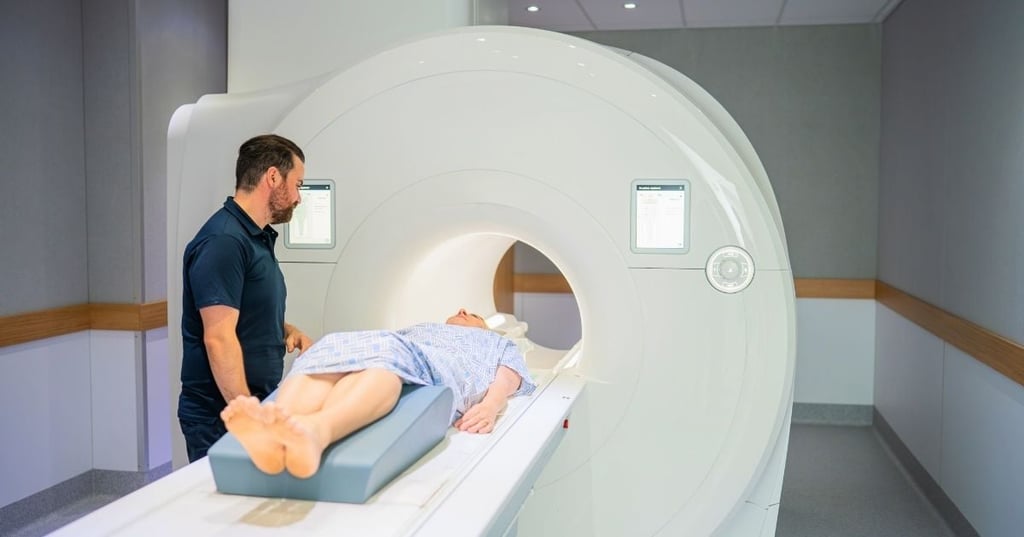
A full-body MRI scan, like the one offered by OneMRI in Australia, is a great way to get a thorough look inside your body without any invasive procedures. One thing our clients love is that it does not require a referral from a doctor, and because it uses no radiation or contrast dyes, it’s safe enough to have regularly if you want to keep an eye on your health. The scan can check for over 500 potential conditions, including:
- tumours
- brain aneurysms
- spinal wear and tear
- fatty liver
- some autoimmune diseases, like multiple sclerosis
Of course, the scan itself is just the beginning – what really matters is how the results are interpreted.
How are the results explained?
Once the scan is done, a specialist radiologist carefully reviews the images, and then a doctor explains the results in plain, easy-to-understand language. This means you’re not left wondering what the scan found, and you can make informed choices about your health moving forward. The big benefit is that it can spot issues early, often before symptoms show up, which can make a real difference when it comes to treatment and long-term outcomes.
What a full-body MRI can’t replace (and why you may still need other screenings)
That said, a full-body MRI isn’t a substitute for all the usual screenings you might be familiar with, like mammograms or colonoscopies. Those tests are still the best way to catch certain specific problems and access Medicare coverage where appropriate.
Also, it’s important to know that right now, Medicare and most private health insurers don’t cover the cost of full-body MRI’s because they’re considered a preventive service rather than a diagnostic one. And while this scan is perfect for people who want to be proactive about their health, it’s not really designed for those who already have symptoms or known conditions that require more targeted testing. So, if you’re someone who likes to stay ahead of things and get a full picture of your health, a full-body MRI with OneMRI can be a really reassuring and valuable tool.
Just remember, it works best alongside your regular health check-ups and conversations with your doctor.
What it was like to get my scan
Here’s what I can tell you with certainty: I learned a lot about my body, about the way I think about my health, and about why so many women are quietly leading this shift in how we care for ourselves.
Why women are leading the shift
At OneMRI, I spend my days speaking with people who are curious about doing a full-body scan. I ask them what they’re hoping to learn, help them figure out if it’s the right fit, and guide them through the process if they choose to go ahead. But the most interesting part often comes after their scan when we talk again, and they’ve had time to digest what they saw, felt, and learned.
More and more, I’ve noticed that it’s women driving this. And they’re not coming from a place of panic or urgency. Most aren’t trying to chase symptoms. Instead, they’re showing up with a calm, proactive mindset: “I want to understand what’s going on inside of me, even if I feel fine.”
Many have never had a chance to look inside their body this way. Seeing their spine, their uterus, their ovaries, their organs, often for the first time, feels surprisingly profound. I remember one woman telling me, “I didn’t expect it to be emotional, but it was. My body has carried me through so much, and I’ve never really seen it.”
Others talk about the sense of grounding they feel afterwards. Not because everything was perfect, but because they finally had clarity. I hear words like ‘reassurance’, ‘insight’, and ‘connection’. Some say it helped them prepare better questions for their GP. Others say it gave them a stronger baseline for understanding their body over time.
For women in particular, there are often small surprises. Things like vertebral compression fractures, which can be early indicators of osteoporosis, especially after menopause, show up on MRI before they become painful or visible on other imaging. Women with dense breast tissue tell me they appreciate having another layer of information. And many didn’t know you could visualise organs like the liver, kidneys, pancreas, and vascular system all in one scan.
What I learned from my own scan
From my own scan, I was struck by how much I’d never seen and how much context it gave me. I’ve never had any major health issues, and I wasn’t expecting anything specific. But just seeing how my uterus sat, how my spine curved, how everything was arranged, that alone felt like a form of understanding I didn’t know I was missing. It wasn’t diagnostic. It was just…informative.
And that’s what keeps coming back in my conversations: the value of knowing what’s “normal” for you before anything feels off. For many women I speak with, this becomes less about chasing disease and more about building familiarity. About making future decisions with less fear and more context.
These are often women who carry a lot. They’re looking after families, careers, and often the health of others. Choosing to pause and prioritise their own health isn’t always easy, but it’s something I’ve come to see as an act of leadership. Quiet, intentional, but powerful.
If you’ve ever had that nudge to know more about your body, not because something feels wrong, but because you want to be informed, you’re not alone. And having done the scan myself, I can now say: I understand why.
For many people, the value of a full-body MRI isn’t about chasing disease – it’s about gaining clarity, reassurance, and a stronger connection with your health. Paired with regular check-ups and conversations with your practitioner, it can become a powerful tool for making confident decisions about your wellbeing.