

You already know deliberate stress – a tough HIIT block, a sunrise cold-plunge, a well-timed fast – can sharpen both body and mind. In clinic, I see high performers thrive on these hormetic hits all year… until winter rolls in.
When daylight hours shrink, I routinely see patients’ vitamin D levels fall. Add dry, heated indoor air that irritates the respiratory lining and a higher concentration of circulating viruses, and you have a seasonal stress load that rivals any hard workout. If we layer that on top of intensive training blocks or extended fasts without adequate recovery, the physiological stimulus that once built resilience can quietly tip into immune debt – often before obvious symptoms appear.
In this article, we’ll keep you in the sweet spot. I’ll show you how to read the early whispers of immune fatigue, use metrics like HRV to time recovery, and adjust fasting, cold and training doses so they fortify – rather than flatten – your innate and adaptive defences. Let’s stay strong, stay sharp, and give winter bugs nothing to work with.
Meet your two defence teams
To see why a well-meant habit can suddenly leave you wide open to the next bug in the room, we need a quick look under the bonnet of the immune system itself.
Your body runs two overlapping defence teams. Innate immunity is the rapid-response unit: natural-killer cells, inflammatory messengers, fever, mucous. It isn’t fussed about an invader’s name tag – it just acts fast and hard.
Adaptive immunity is the specialist squad. It studies each pathogen, builds a bespoke antibody or T-cell response, and files the blueprint for next time.
Short, calculated hormetic stressors (training, cold, fasting) can tune both teams – provided recovery follows. Push the dose too high or string stressors back-to-back in winter and the innate side slows, while the adaptive side never gets the clear signal to learn. That’s the moment a routine cough on the tram turns into a week on the couch.
Train immune tolerance, not immune over-drive
Now that we’ve covered the roles of the innate and adaptive branches, the priority becomes response precision – achieving an immune reaction that is effective yet proportionate. Clinically, we call this immune tolerance. If the response is insufficient, pathogens multiply unchecked; if it is excessive, a surge of pro-inflammatory cytokines can damage tissue, prolong recovery, and disrupt sleep long after the infection has cleared.
Spot the early red flags
So, how do you know when that helpful hormetic stress is edging toward compromised immunity? In clinic, I look for a cluster of very ordinary-looking signals that arrive a day or two before an infection takes hold:
- Post-workout sniffles or a scratchy throat: especially if they show up after sessions that felt routine
- Sluggish healing: a small cut, blister or bruise that hangs around longer than usual
- HRV sliding and resting heart-rate creeping up: your wearable is often ahead of your symptoms
- Sleep out of shape: less deep sleep, vivid dreams, or waking unrefreshed despite your usual hours
- Mood or motivation dip: you feel flat, irritable or oddly apathetic about a session you normally enjoy
If two or more of these signals cluster within a couple of days, it’s a strong hint that your fast-acting innate defences are flagging and your adaptive “memory” cells haven’t yet mounted a full response, leaving a temporary gap in protection.
That’s your cue to lighten the stress load – swap the ice bath for a warm shower, cut a fast short, trade HIIT for zone-two cardio, and shift your focus toward recovery (more on this to follow). Small course-corrections here can spare you the spiral into full-blown winter malaise.
Let your HRV and resting heart rate call the shots
Wearables aren’t perfect, but two numbers give a surprisingly clear snapshot of immune readiness: heart-rate variability (HRV) and resting heart rate (RHR). HRV tells us how flexibly your nervous system shifts between “go” (sympathetic) and “grow” (parasympathetic). RHR shows the basic workload your body is carrying while you sleep. Read together, they flag hidden strain before symptoms surface.
How to read the signals
Know your personal baselines: Log two weeks of data when you’re well-rested and healthy; that average is your normal.
Direction matters more than a single reading: A one-off HRV dip or RHR blip after heavy deadlifts is expected. Sustained change is the warning.
The classic pattern: HRV trending down while RHR creeps up for two days means your innate team is busy and recovery credit is running out.
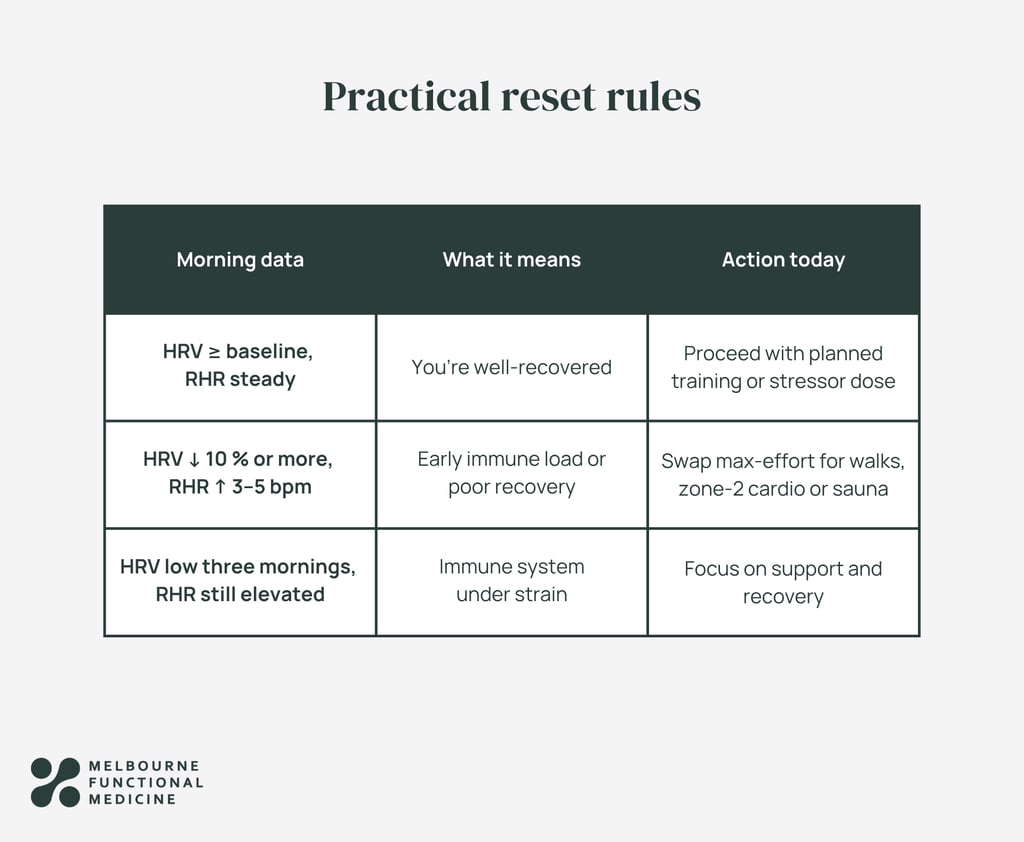
Use these numbers as a quiet conversation with your body, not a competition. When HRV drops and RHR rises, scaling back keeps both your innate first-responders and adaptive specialists primed for the genuine threats winter will throw at you.
Double down on your four pillars
When HRV starts sliding or sniffles whisper at the edge of a workout, the smartest move isn’t another supplement – it’s tightening the basics that quietly hold immunity together.
Sleep
Adequate sleep is pillar one. Aim for seven-to-nine solid hours and protect the first half of the night, when natural-killer-cell activity peaks and growth hormone repairs tissue. Even a single night of sleep restriction can reduce natural kill cell activity and push pro-inflammatory cytokines higher the next day, tilting the immune response away from tolerance and toward over-drive.
Whenever HRV slips, add one extra 90-minute sleep cycle and you’ll see both HRV and morning readiness rebound quickly.
Stress mastery and social connection
Breathwork, meditation or a simple 4-7-8 cycle keeps cortisol in check, but genuine human connection matters just as much. Positive social contact triggers a surge of oxytocin that calms sympathetic drive and tempers pro-inflammatory cytokine activity. Even a brief walk with a friend can provide a stronger immune-soothing effect than another solo mindfulness session.
Purposeful movement (with recovery)
Two or three high-intensity or heavy-strength sessions per week build fitness, but inflammatory markers rise sharply when intense training isn’t matched with recovery. Balancing those harder days with zone-two cardio, walking and sauna helps clear inflammatory by-products and preserves immune tolerance.
A nutrient-dense, anti-inflammatory diet
A colourful, whole-food plate supplies the micronutrients your innate and adaptive branches burn through quickly.
- Post-workout window: within two hours of a hard session, include ~30 g of quality protein plus brightly coloured plants to support immune cells and suppress excess inflammation
- Gut support: a daily serve of sauerkraut, kefir or miso – or a practitioner-selected multi-strain probiotic – broadens microbial diversity and trains gut-associated lymphoid tissue to mount proportionate responses
Cut back ultra-processed snacks, excess alcohol and refined sugar; these deplete antioxidant reserves, making an over-zealous inflammatory surge more likely.
Remaining well hydrated is also important. Optimal hydration keeps your mucous membranes moist and intact, maintaining a frontline barrier that makes it harder for viruses to gain a foothold. Drink steadily before, during and after training, and replace lost electrolytes post-workout so that fluids move efficiently into cells rather than straight through you.
Whenever winter stressors begin to pile up, circle back to these four pillars first. They’re the quickest, most reliable way to lift HRV, steady resting heart rate and give both your innate first-responders and adaptive special forces the platform they need to keep you in the sweet spot.
Cold, fasting & high-intensity training – finding your winter “sweet spot”
Hormetic stressors are like espresso shots: the right amount wakes the system; too many leave you wired, jittery, and – ironically – tired. Winter lowers the margin for error, so let’s talk practical dosing.
Cold immersion still offers a reliable dopamine lift and anti-inflammatory nudge, but short and strategic beats long and heroic this season. Two or three plunges a week, each under five minutes, are plenty. Slip them in after a light session or on a rest day, then re-warm immediately with light movement and layers; lingering shivers drive stress hormones up and curb immune tolerance.
Intermittent fasting keeps metabolic flexibility sharp, yet prolonged food gaps plus heavy training in low-sunlight months can drain glycogen and immune cell energy. Twelve- to fourteen-hour overnight fasts work well for most people now; reserve 18-hour or 24-hour fasts for weeks when sleep is excellent, training is lighter, and HRV is strong.
Daily max-effort sessions of HIIT and heavy strength work or endurance sessions can spike IL-6 and drop natural-killer-cell activity. Two to four high-intensity workouts a week, each followed by protein-rich meals and genuine rest days, strike the right winter ratio. Fill the gaps with zone-two cardio, walking, or a sauna.
How you know you’ve crossed the line
If your morning HRV is sliding despite early nights, resting heart rate sits three to five beats above normal, or that quick cold plunge leaves you unusually fatigued, the stress bucket is overflowing. Swap the next fast for a nutrient-dense breakfast, trade the ice bath for a warm shower, and let your next training day stay in zone two. You’ll bounce back faster and keep both arms of the immune system in fighting form when winter viruses come knocking.
Smart supplement stack
Supplements work best when they sit on top of solid habits, not in place of them. Once sleep, nutrition and recovery are dialled in, I generally recommend three winter “basics” for most high-performers:
- Vitamin D3 with K2: blood levels tend to fall fast once Melbourne’s daylight shrinks. Keeping serum D above 100 nmol/L supports T-cell activation and mucosal immunity. For many patients that means 2000–4000 IU of D3 daily, paired with 100 µg of K2; adjusted to blood tests
- Zinc (bisglycinate or citrate, 15–25 mg with dinner): maintains thymus function and antibody production. If you already eat oysters weekly and use a multi, check your total intake before adding more
- Buffered vitamin C (500 mg twice daily): replaces antioxidants rapidly burned during intense training and helps rein in excessive inflammatory signalling
Beyond those staples, I tailor support to an individual’s workload and travel schedule. If you’re facing crowded airports or a household bug, targeted allies for strengthening immunity – lactoferrin, propolis spray, astragalus or medicinal mushrooms – can be valuable.
As always, run new supplements past your practitioner if you’re pregnant, on medication or managing a chronic condition.
Find your winter sweet spot
Stay in the sweet spot this winter: load your system with purposeful stress, then balance it with real recovery.
Let HRV and resting heart-rate guide those decisions, use early red flags as a prompt to tighten the four pillars, and keep any cold plunges, fasts or HIIT sessions within doses you can truly rebound from.
When the load is high, lean on the winter basics – vitamin D, zinc, buffered C – and reach for targeted supports only when you need them.
Train hard, recover harder, and treat immune resilience as the performance metric it is.
If you’d like a personalised plan or a second set of eyes on your data, we’re here to help you stay strong, sharp and illness-free all season.