

“Fat” is a broad term (pardon the pun). It can mean the dietary fat we eat, the fatty acids our body uses for energy, or body fat which is known in the clinical sense as adipose tissue. But when it comes to adipose tissue, not all fat is the same, and where it sits in your body can make a big difference.
When most people talk about body fat, they think about the stuff they can pinch under their skin. That’s subcutaneous adipose tissue, the soft layer of fat just beneath the skin that stores energy, cushions the body, and helps regulate temperature.
But fat is more than just passive storage.
It’s now recognised as a complex endocrine organ, actively sending signals that influence metabolism, hormones, and even inflammation.
As Sylvia Tara PhD, author of ‘The Secret Life of Fat’ explains: “It’s critical. And we do really have to manage our fat intelligently if we really want to have a healthy life and have our body functioning optimally.”
But there’s a type of fat that isn’t visible, and keeping it in check is far more important when it comes to our longevity and healthspan: visceral adipose tissue, which we’ll call visceral fat.
What is visceral fat?
Visceral fat is the type of body fat stored deep inside your abdomen, packed around vital organs such as the liver, pancreas, intestines, and kidneys.
Visceral fat is more metabolically active than subcutaneous fat, meaning it constantly produces more inflammatory proteins – signalling molecules known as cytokines- such as tumour necrosis factor-alpha (TNF-alpha) and interleukin-6 (IL-6). These proteins can narrow blood vessels, trigger chronic low-grade inflammation and raise blood pressure. That means it can interfere with hormones and biological processes, increasing your risk of chronic diseases such as:
- Cardiovascular disease – raising the risk of heart attacks and strokes
- Type 2 diabetes – when the important function of insulin is compromised (insulin sensitivity)
- Metabolic syndrome – a cluster of conditions including high blood pressure, high cholesterol, and elevated blood sugar
- Colorectal cancer – visceral fat not only drives risk but also limits post-surgery recovery
- Breast cancer – especially in postmenopausal women
- Dementia
Even people who look slim can have dangerous levels of visceral fat. This is why understanding your true body composition is critical – it helps you see beyond the scales and identify hidden risks that aren’t visible from the outside. By knowing where fat is stored in your body, you can take targeted steps to protect your long-term health.
So how can you find out if you’re carrying excess visceral fat?
How do you measure visceral fat?
The most accurate way to measure visceral fat is with a DEXA scan.
Whilst tools like weight scales, BMI, and waist measurements are generally informative, they don’t tell you exactly how much visceral fat you’re carrying. For health optimisers who want precision, a DEXA scan (or DXA) scan – short for Dual-Energy X-ray Absorptiometry – is recommended.
A DEXA is a safe, non-invasive imaging test that precisely measures body composition, including fat, lean muscle, and bone density. It’s considered the gold standard for tracking changes over time, revealing fat distribution across the body and visceral fat levels around organs.
Many clients ask “how safe is a DEXA really?” I like to explain to clients that although yes, DEXA is an X-ray, the machine uses a very low dose of ionising radiation to measure bone density, fat mass, and lean body mass. The radiation dose from a single DEXA scan is extremely low, around 4 microsieverts, which is less than one day’s exposure to natural background radiation or a flight from Melbourne to Sydney.
How a DEXA scan reveals the whole picture
At Arekai Imaging, we use advanced DEXA body composition scanning with CoreScan technology to provide the most accurate picture of your internal fat distribution.
In under 30 mins, our clients get:
- A precise measurement of visceral adipose tissue and subcutaneous adipose tissue in the abdominal region
- A clear visual and numerical report, showing exactly how fat and muscle are distributed throughout your body
- Over 200 detailed parameters to track body composition and metabolic health risks
- Insight into how your fat levels change over time, helping you (and your practitioner) see whether lifestyle, nutrition, or exercise interventions are making a difference
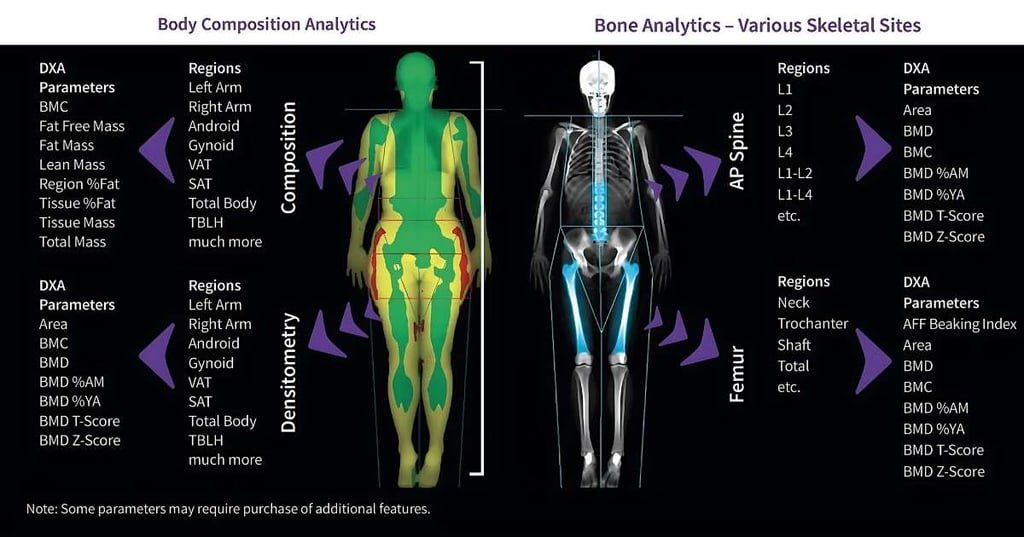
This data allows for targeted, personalised strategies to reduce health risks and optimise long-term wellbeing. By knowing exactly how your body is changing on the inside, you and your healthcare provider can make smarter, evidence-based decisions – whether that’s refining your nutrition, adjusting your training, or monitoring progress over time.
Who should consider a visceral fat assessment?
A DEXA scan with visceral fat measurement is valuable for anyone who wants a clear, objective picture of their internal health. It’s particularly valuable if you:
- Have a family history of cardiovascular disease or diabetes
- Carry excess weight, even if your BMI is within the “normal” range
- Lead a mostly sedentary lifestyle
- Show signs of metabolic syndrome, such as high blood pressure, high cholesterol, or elevated blood sugar
- Are peri- or post menopausal, tracking fat distribution over time can be especially informative
What can be done to reduce visceral fat?
The good news is that for most of us, visceral fat is responsive to positive lifestyle changes. With the right approach, incorporating all the things we know, like regular physical activity, dietary adjustments, better sleep, and mastering stress, most people can lower visceral fat levels and significantly improve their health outlook.
If you have tried lifestyle change with no luck, a more personalised investigation using a functional medicine approach could be in order. As Mark Payne explains, “A functional medicine practitioner would ask, ‘What’s driving visceral fat accumulation in the first place?” Instead of only treating the outcome (excess fat), we look upstream.”
The types of investigations would depend on a thorough functional review to determine which system could be compromised, for example, is it the gut-liver axis, immune system, neuroendocrine system or metabolic system? And what clues can we find in biomarkers such as Akkermansia muciniphila levels, cortisol awakening response, hs-CRP, fasting insulin levels.
As Mark adds, “Visceral fat isn’t just about weight or aesthetics. It’s a symptom of disrupted systems biology: metabolic, hormonal, inflammatory, or environmental or all of these. By uncovering why it’s there, we can intervene earlier, personalise care, and ultimately protect longevity.”
Why is reducing visceral fat key to longevity?
Reducing visceral fat is central to living longer and healthier because this type of fat is highly active in the body.
It releases inflammatory molecules, hormones, and free fatty acids that disrupt blood sugar regulation, damage blood vessels, and accelerate ageing.
High levels are strongly linked to insulin resistance, cardiovascular disease, fatty liver, dementia, and cancer, all of which shorten lifespan.
By lowering visceral fat, you reduce systemic inflammation, restore metabolic flexibility, and protect vital organs, creating the conditions for a longer and healthier life.
At Arekai, our role is to provide clear and objective insight into your visceral fat levels and other related tissue measurements. Using advanced DEXA CoreScan technology, we measure what can’t be seen, giving you and your practitioner the information you need as a team to make smarter, data-driven decisions about your health.
If you’re considering a DEXA, Arekai has partnered with Melbourne Functional Medicine to make access simple for Victorian patients.
Book your scan online and mention MFM as your referring clinic, and receive your required medical referral free of charge. Your report will also be shared directly with your MFM practitioner for recommendations to be integrated into your health optimisation plan.